
How to Clean Up Your Garden in the Fall: A Step by Step Guide
In October each year, our zone 7b garden usually experiences its first frost of the season. The temperatures drop at night and the majority of our vegetable and flower plants start to die down. Once we see that frost forecasted, we like to do a full garden cleanup to prepare it for the next spring. Cleaning up your garden in the fall saves a lot of cleanup time the following spring and your soil and local pollinators will benefit from it as well. It might seem overwhelming to clean up an entire garden all at once, but if you follow these easy steps, you’ll have your garden cleaned up and ready for next spring in no time.
Fall Garden Cleanup Step 1: Harvest Everything
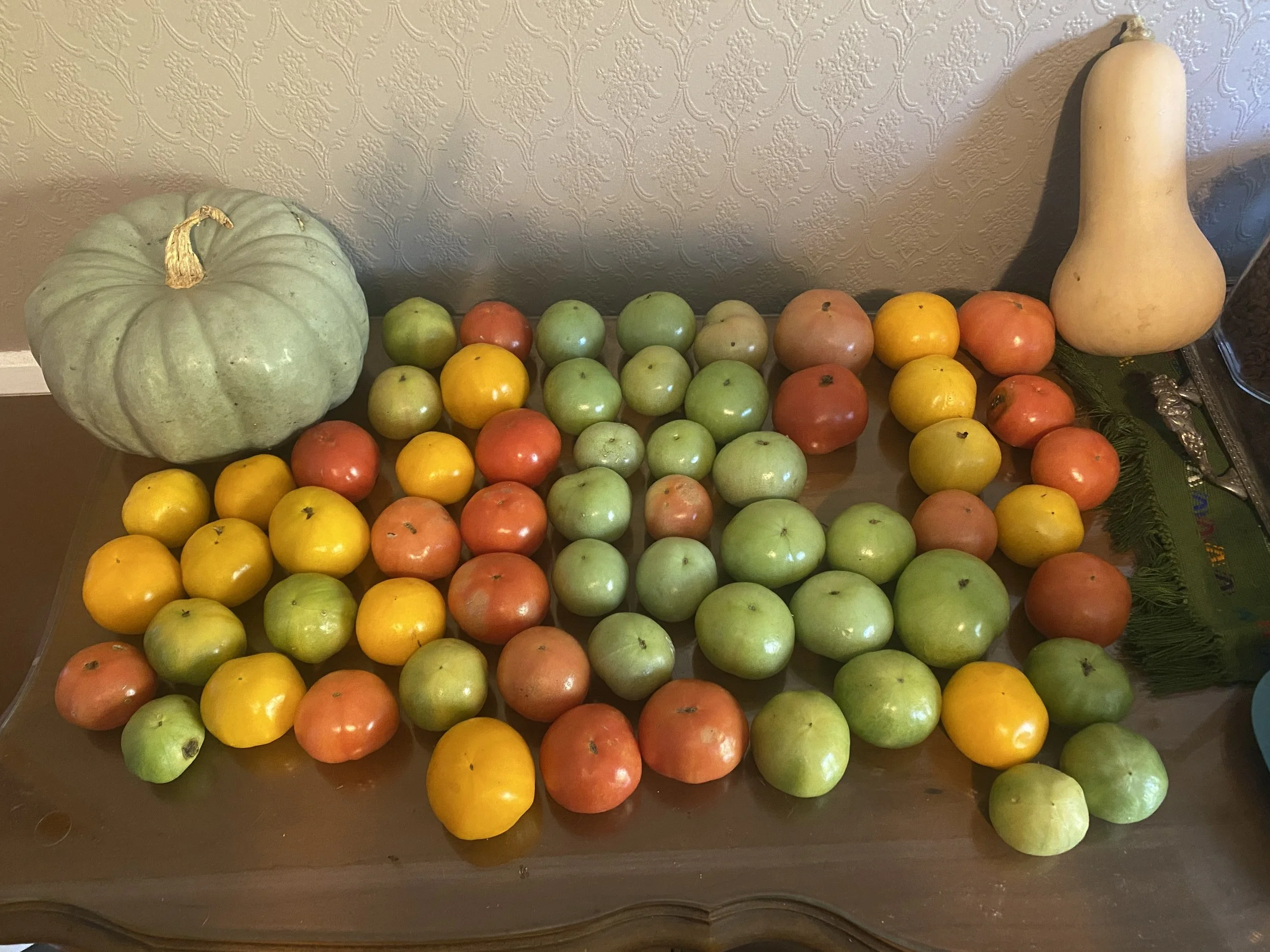
The first thing you should do when you see a frost coming is to harvest all the heat loving crops from your garden so they don’t go bad. Plants like tomatoes and peppers won’t survive cold weather for very long, which means any vegetables left on the plant will stop growing. The great thing about tomatoes and peppers is that they can ripen on your countertop! We pick everything off of our plants and lay them out on our dining table for a few weeks to ripen naturally. There are some plants that can tolerate short periods of cold weather, like winter squash, lettuces, and brassicas. Just keep an eye on them if you leave them in cold weather or consider covering them with frost protection so they can survive a bit longer.

Fall Garden Cleanup Step 2: Remove Existing Plants
Once you’ve harvested everything, you can start removing the plants from your garden space. We prefer to cut our plants at the base, right at the soil level. This leaves the roots of the plants still in the soil, but those roots will protect your soil and act as a foundation. The roots will break down over time, but during the winter, they will improve the soil’s structure, water retention, and add beneficial nutrients back into the soil. We add all of the plant trimmings to a compost pile and let it break down over a few months. This leaves some space for insects to burrow over winter and you can use it for compost in your future garden space. If you have any plants that are diseased or infested with pests, put them in a separate pile that won’t be used as compost for the garden since they can spread those diseases and pests to your new plants. If you have cold hardy plants that are still growing, remember that they won’t last through multiple days of freezing weather. Once the weather gets too cold, remove the cold hardy plants and add them to your compost pile.
Fall Garden Cleanup Step 3: Top the Soil
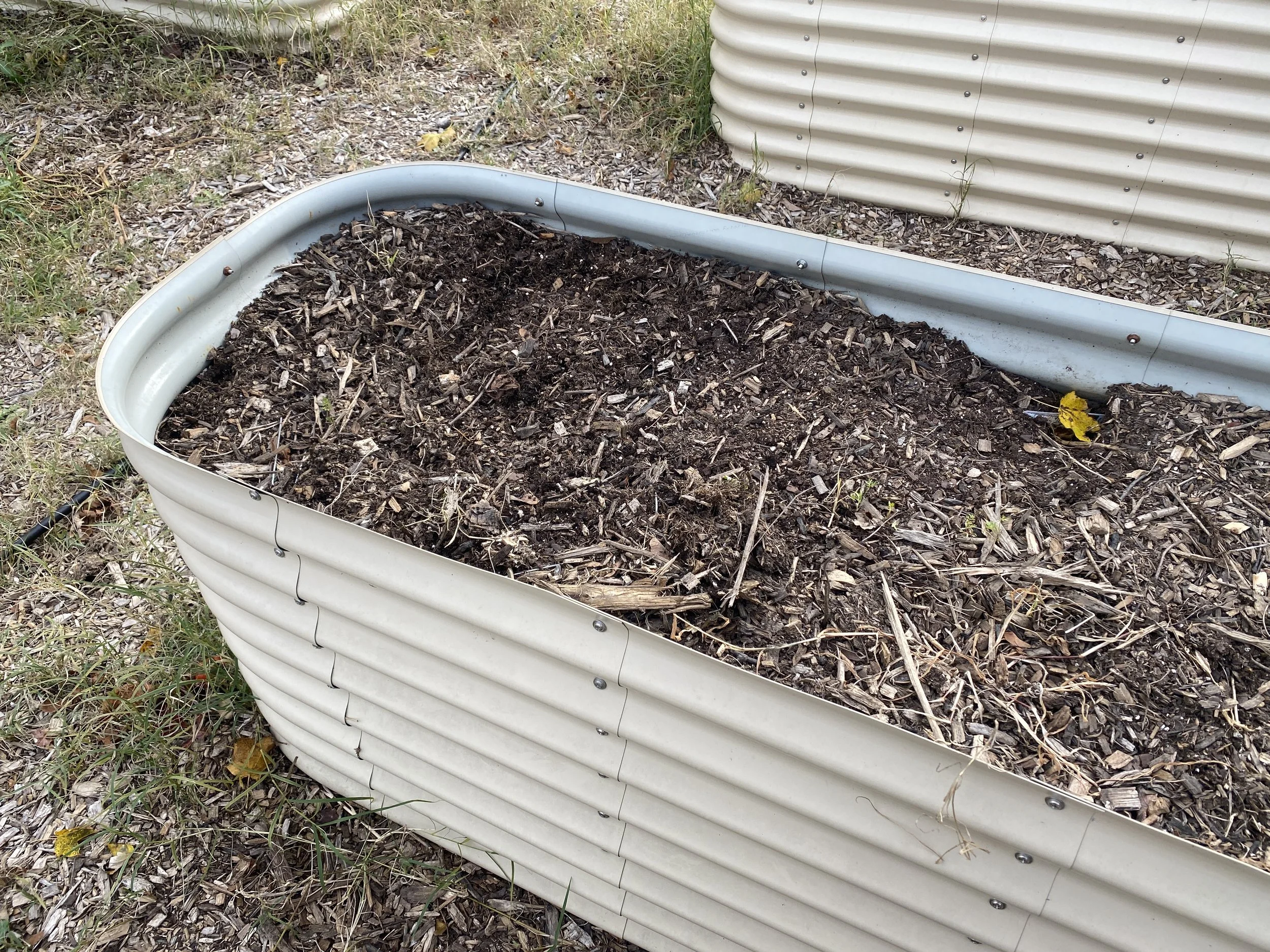
Once all of your plants are removed, consider topping your soil with compost and mulch. The compost will help break down the plant roots that are still in your soil and add beneficial nutrients to your soil. The mulch will keep the soil protected from weeds and from drying out and clumping from exposure to the elements. While topping the soil isn’t a required step, it’s a good way to save yourself time in the spring so your beds are ready for planting as soon as the weather warms up.

Fall Garden Cleanup Step 4: Plant Bulbs
There are several plants you can add to your garden a few weeks before your first frost date. We love to plant garlic, flower bulbs, and crop covers in our garden beds each October. Garlic is a great crop to add to your garden in the fall because it needs the cold weather to initiate the growth of larger garlic bulbs. There are also a lot of early spring blooming flowers that get planted in the fall like tulips, daffodils, crocuses, and hyacinths. Check your local garden store for bulbs that you can plant in your area. These flowers tend to be some of the first food available to pollinators after winter, so they are a great addition to any garden space. Most of these flowers are perennials, meaning they’ll come back every year without you needing to do anything. Another option for your garden space is to add cover crops, which add beneficial nutrients to your soil and beat out weeds in the space. Cover crops are usually ones that are chopped and dropped, so the plants will break down and release the nutrients into your soil so it’s ready for your next vegetable plant.
Fall Garden Cleanup Step 5: Manage Leaves
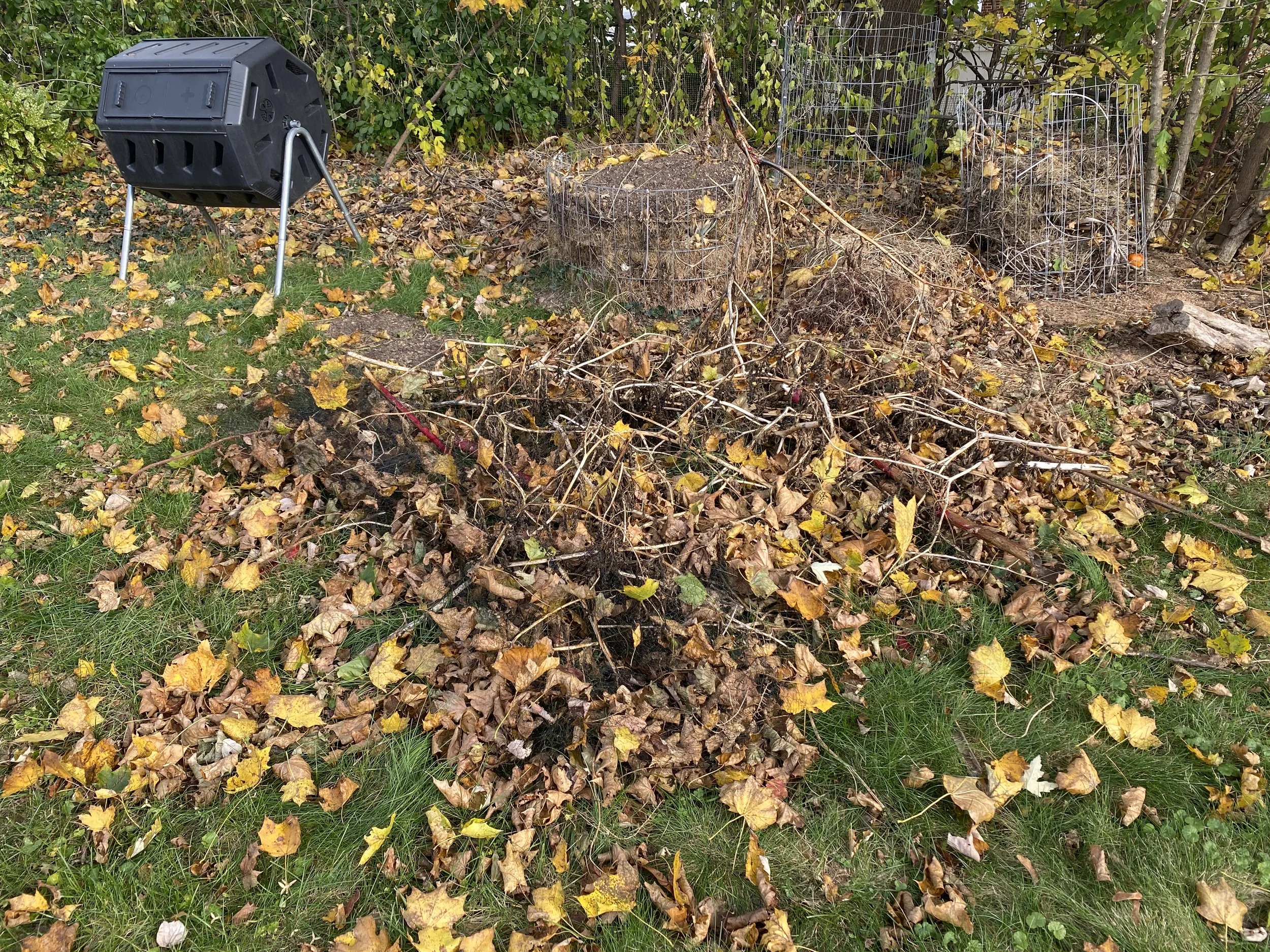
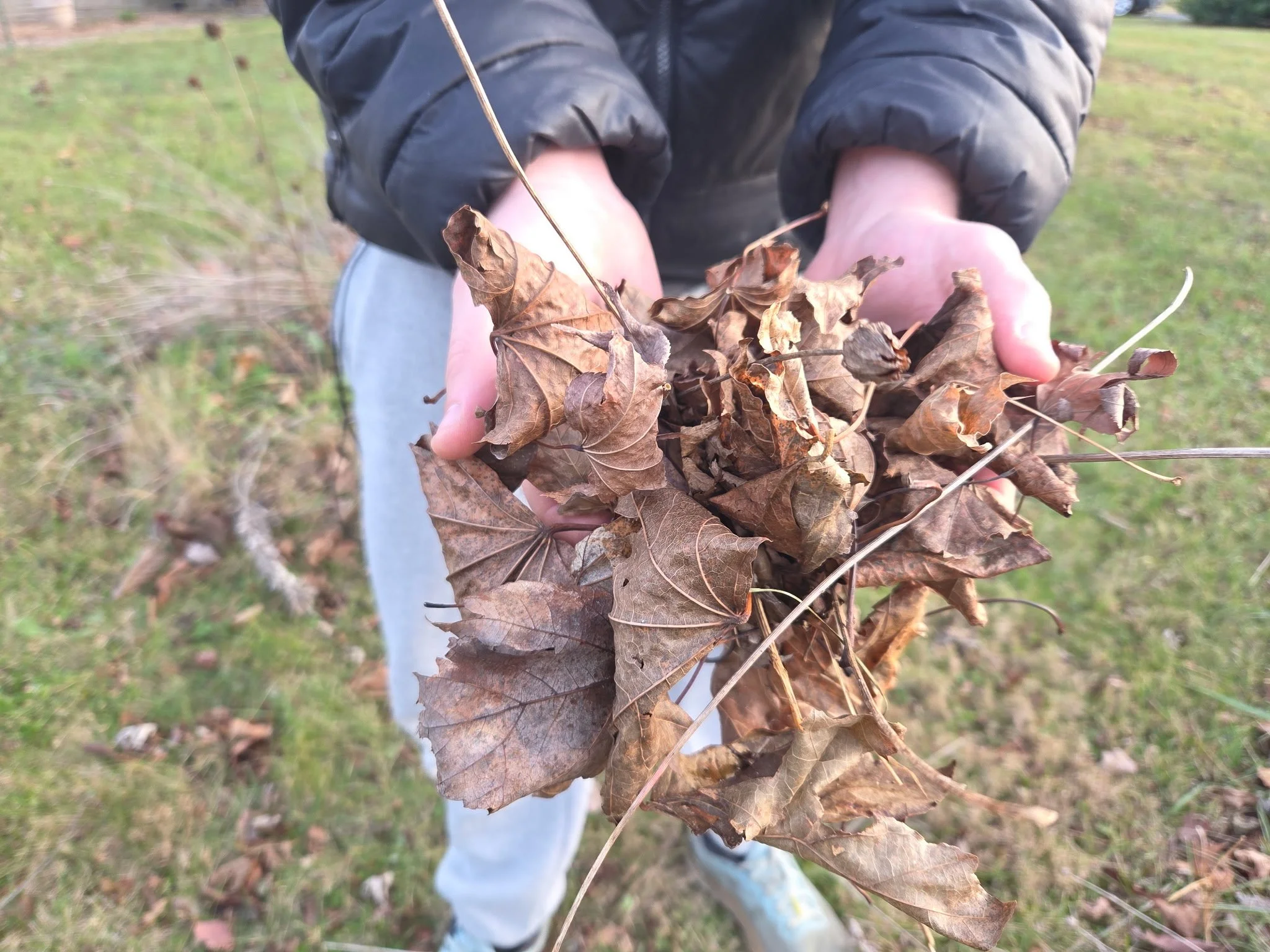
If you have any trees in your space, you likely have a ton of leaves covering the garden in the fall. Leaves are often used by insects to burrow during the winter, so the best option is to leave everything and let it break down naturally. This might not work for your space, so if you need to clear the leaves, try using a leaf blower and creating piles of leaves around the yard. The piles will naturally break down over time, while leaving space for insects to burrow if needed. If you want to keep them contained, you can pile them into towers made out of cattle gate or chicken wire, which will let the leaves break down without them blowing around in the wind. Leaves also make a great mulch, which is helpful for perennial plants or garlic and flower bulbs to keep them warm during the winter.
Start Preparing for Next Year’s Garden
Now that the garden space is cleaned up and prepared for next spring, it’s time to relax and enjoy all of your preserved harvests. November and December are usually slower periods, but once we get to January, it’s time to start planning out the next garden.
You May Also Like
About the Authors
The Votana Garden began with a desire to live more sustainably and grow our own food, flowers, and herbs. We started with no experience and have learned one season at a time. We share tips and practical insights to help make gardening and sustainable living feel possible for everyone.

A compilation of our favorite tomato varieties that we grow over and over again for their flavor, storage capability, or growing style.