
20 Garden Tools That Make Perfect Gifts for Gardeners
Whether they tend a small balcony garden or manage a thriving backyard oasis, gardeners appreciate gifts that are sustainable and practical. Over the past several years, we have tried a ton of gardening products for both our indoor and outdoor gardens. In this guide, we’ve compiled some of the best tools for gardeners, so you can surprise your favorite gardener with a thoughtful and useful gift that they’ll love.
Whenever purchasing a product, we recommend looking for used options first. Check your local buy nothing groups and thrift stores before opting to buy new. Since second hand items are not always available, we have provided links to these products below.
Disclosure: This post contains affiliate links. As an Amazon Associate, I earn from qualifying purchases.
1. Pruning Shears
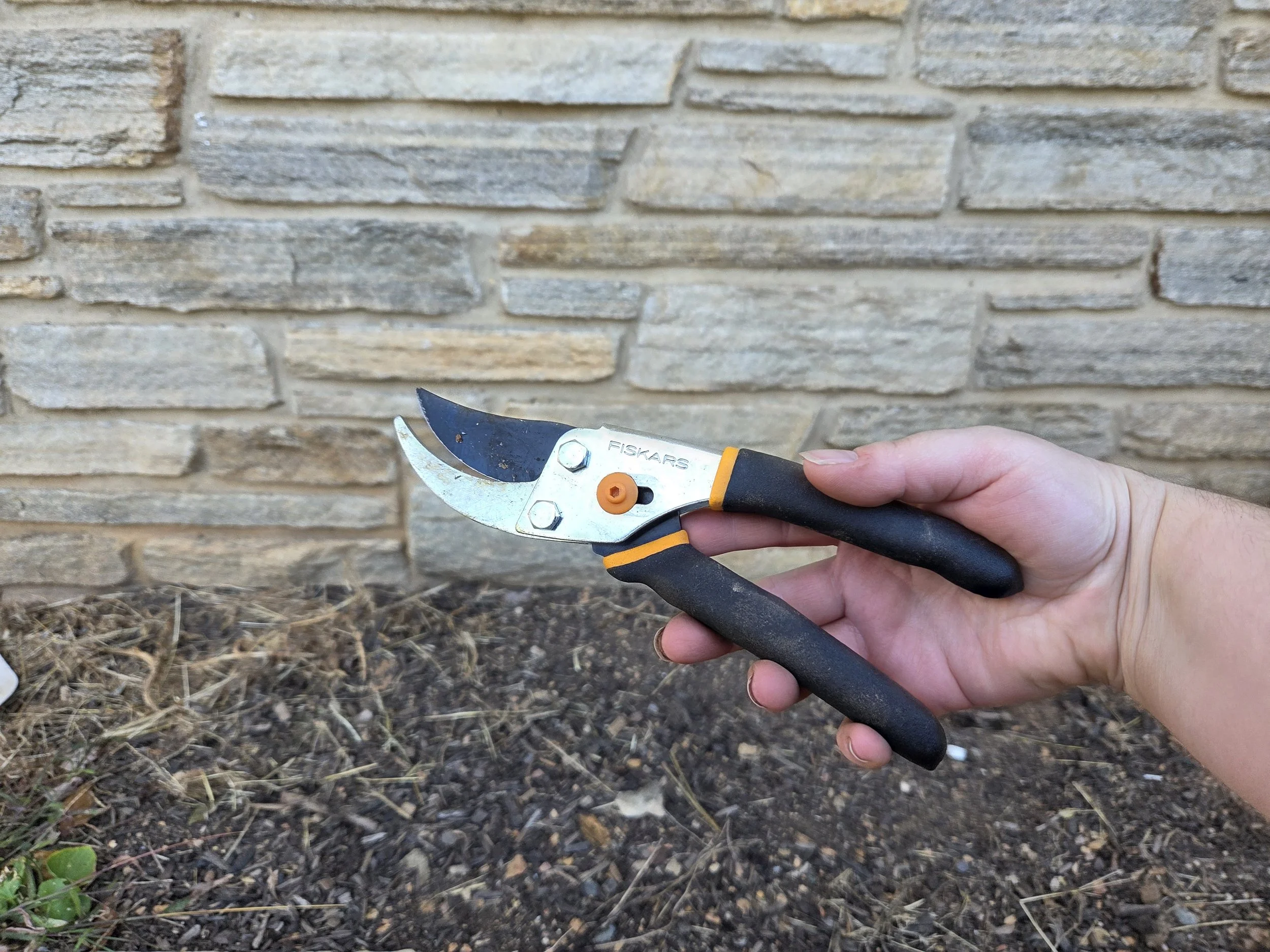
There are a lot of options when it comes to gardening shears, but having a basic pruning shear is a must for any gardener. Pruning shears are ideal for cutting flower stems or trimming plant branches. We love to keep pruning shears on hand for defoliating plants for better airflow and for harvesting larger vegetables like peppers and tomatoes. They also work great for pruning larger bushes if the stems aren’t too thick.
Fiskars is a great brand for any gardening tool. The Fiskars Bypass Pruning Shears (affiliate link) are rust resistant and have been an essential tool in our garden for years.
2. Herb Garden Scissors
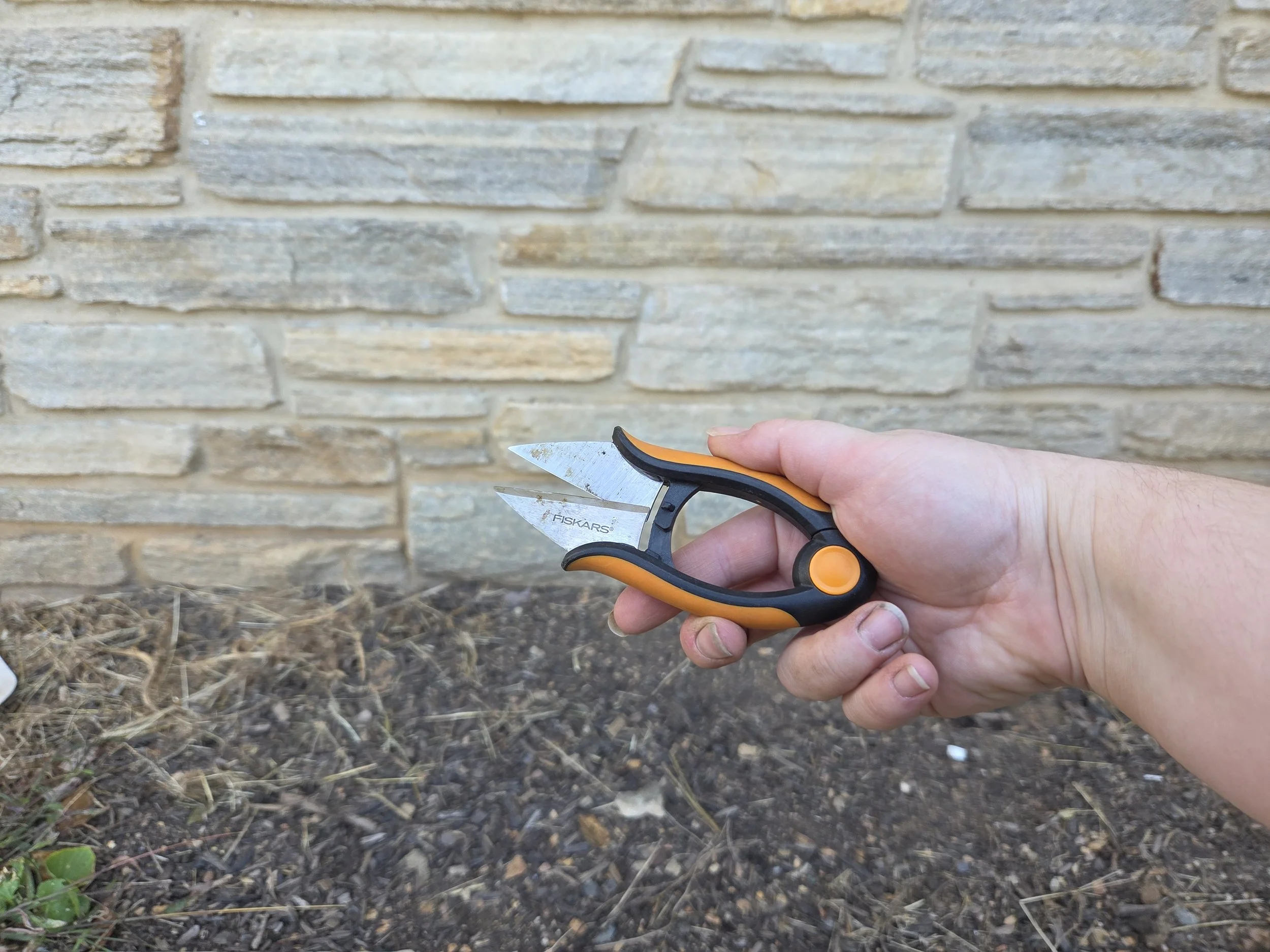
While pruning shears are great for most pruning and harvesting, herb garden scissors are great to have for smaller plants or hard to reach harvests. We love using our herb garden scissors to collect any herbs or flowers from our tea garden. They also fit in your hand very nicely and are much easier to maneuver around with when you need to get into a large or overgrown plant.
The Fiskars Herb Garden Scissors (affiliate link) are our go to choice for harvesting herbs, vegetables, and even flowers.
3. Blade Sharpener
With any shears or scissors that you use in the garden, the blades will eventually begin to dull, regardless of how well you take care of them. Keeping your blades sharp on your garden tools will make any pruning and harvesting easier and it will reduce your chances of damaging your plants. We like to sharpen the blades on all of our garden tools annually during the winter.
This Garden Tool Blade Sharpener (affiliate link) is easy to use on most garden tools and is small enough to store away.
4. Hori Hori Garden Knife
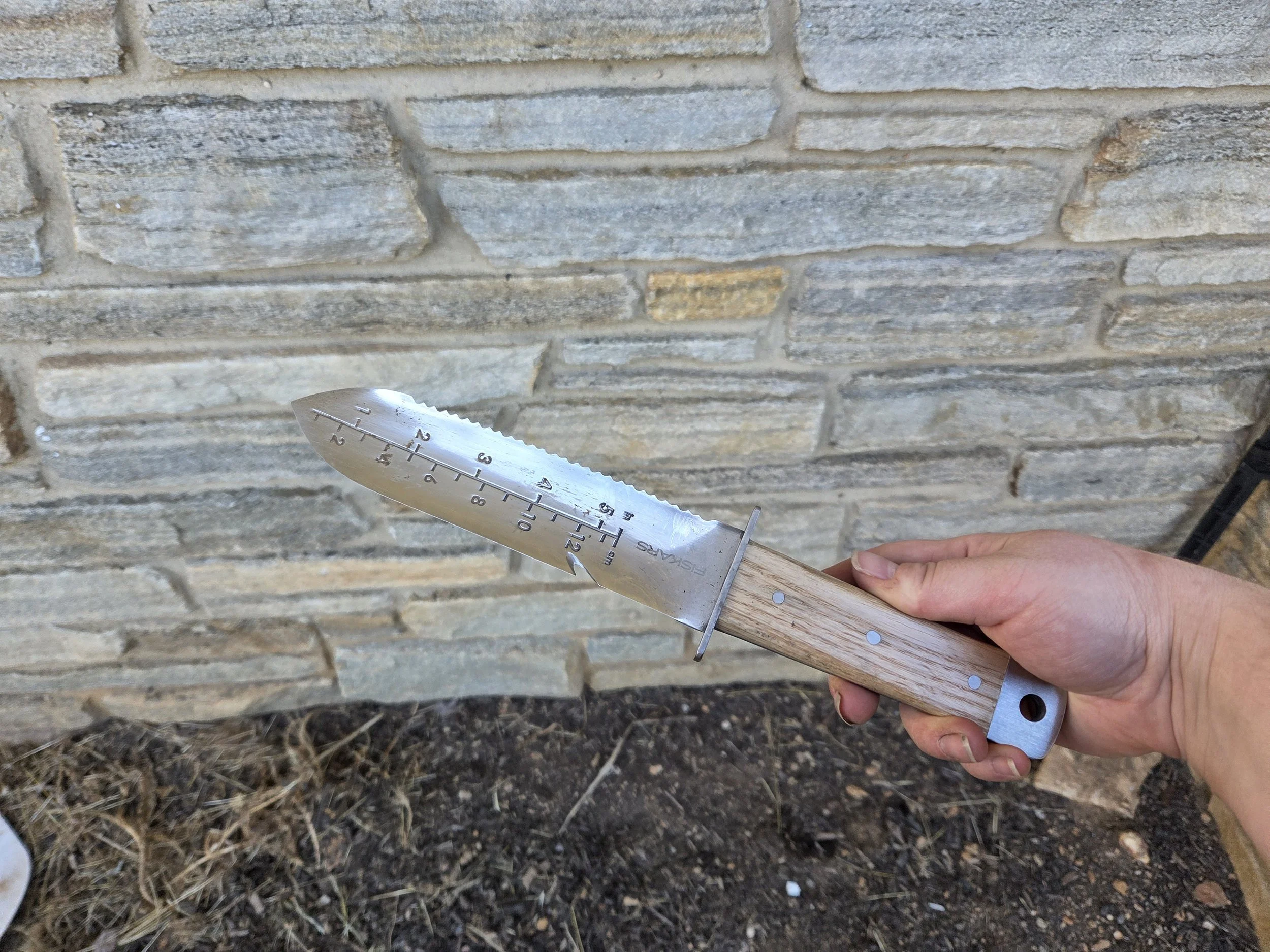
A hori hori garden knife is a Japanese inspired garden tool that is one of our favorite tools to use in the garden. Not only does it work great for digging, but the serrated edge makes it easy to cut open bags or slice off parts of the plant. It even has a pointed tip to make digging out pesky weeds easier.
We use an older version of the Fiskars Hori Hori Garden Knife (affiliate link), but the newer model includes the pointed tip for weeding.
5. Scuffle Hoe
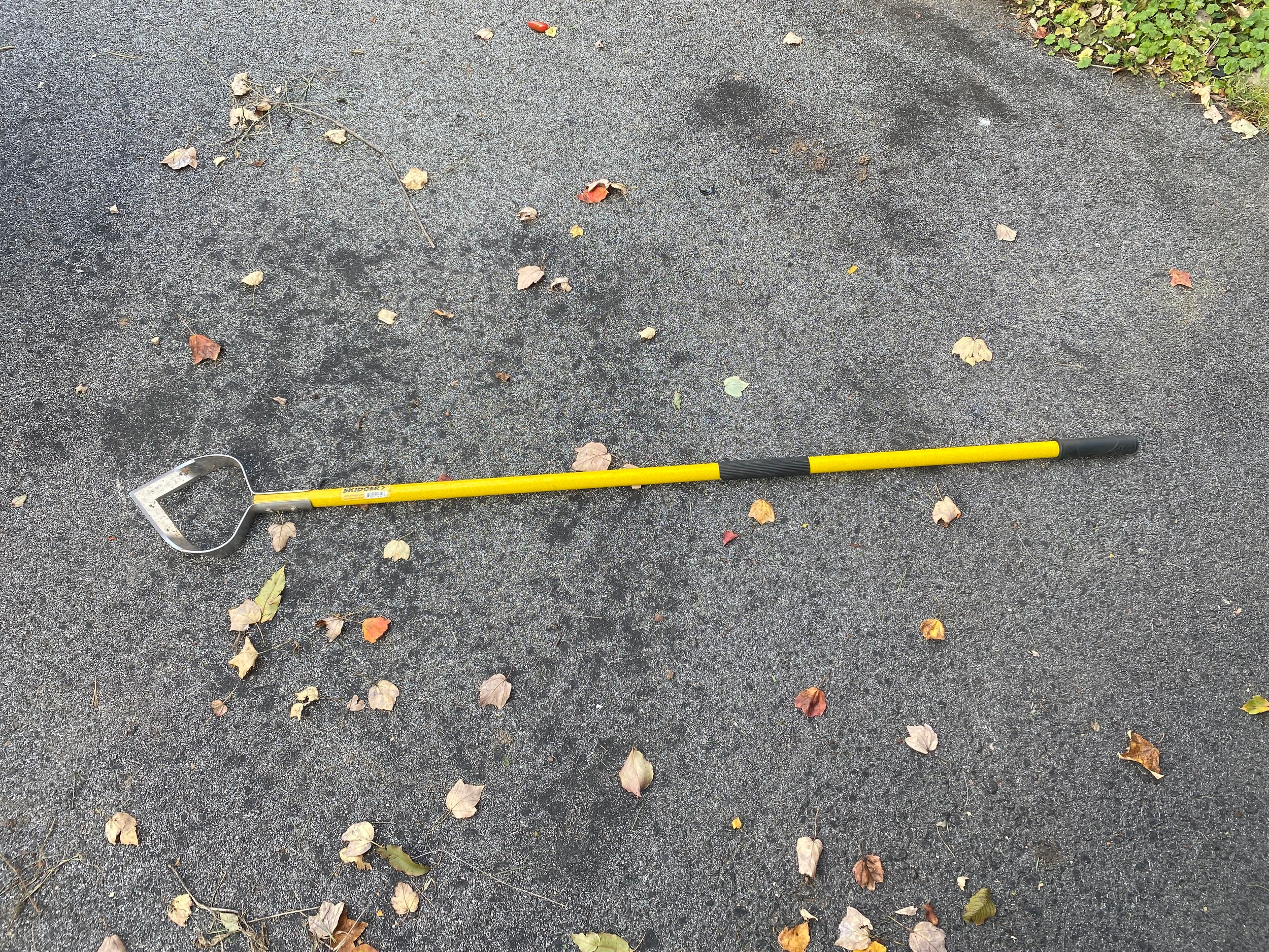
When maintaining a garden, the weeding can be endless. Having a tool to help with that weeding will save any gardener a lot of time and energy. A scuffle hoe has a blade on the end that breaks apart plant roots right below the soil level when you use it. We love to use this for large garden spaces or in the fall when we are cleaning up everything for winter.
This Xtreme Weeder (affiliate link) is easy to use and has lasted us for several years.
6. Loppers
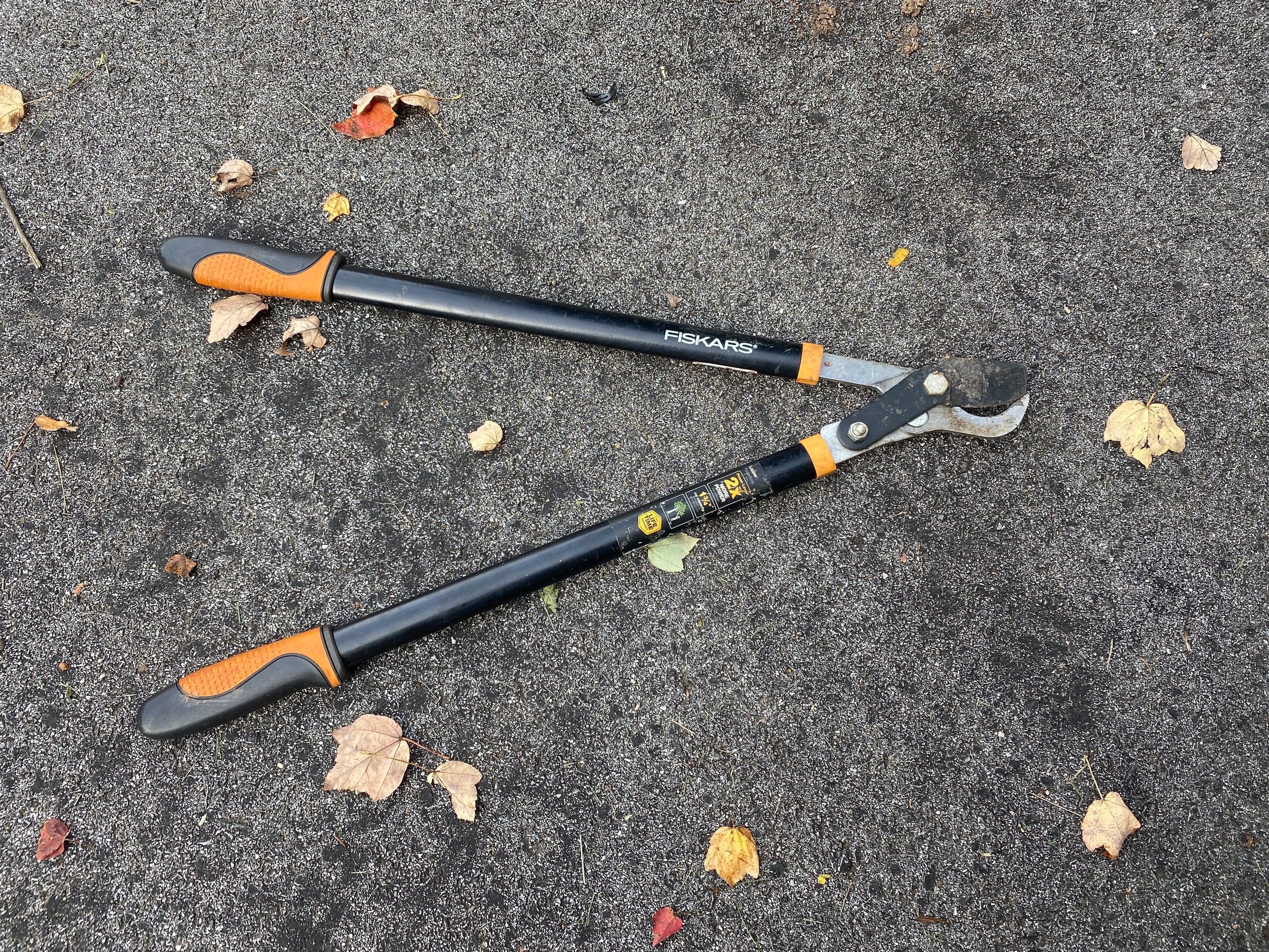
Although most plants can be managed with smaller garden shears, it’s useful to have loppers on hand for larger plants or thicker stems. We keep a pair of loppers handy to cut up small pieces of wood, but we pull it out whenever we have a really thick plant stem that we can’t cut with shears.
The Fiskars 28” Loppers (affiliate link) are a versatile tool to add to any garden.
7. Plant Grow Bags
Whether someone is new to growing plants or a seasoned gardener, fabric grow bags are a great option to have available. When we first started gardening, we used fabric grow bags for all of our plants. It helped us learn a lot about gardening, like how much space we needed or how much sunlight certain plants want. Now that we have our full garden set up, we still use the fabric grow bags to add plants around our yard or get seedlings started. They are especially great if you need to transport a plant around depending on the season or weather.
We use VIVOSUN 5 Gallon Grow Bags (affiliate link) and they’ve lasted in our garden for several years with no issues.

8. Raised Garden Bed
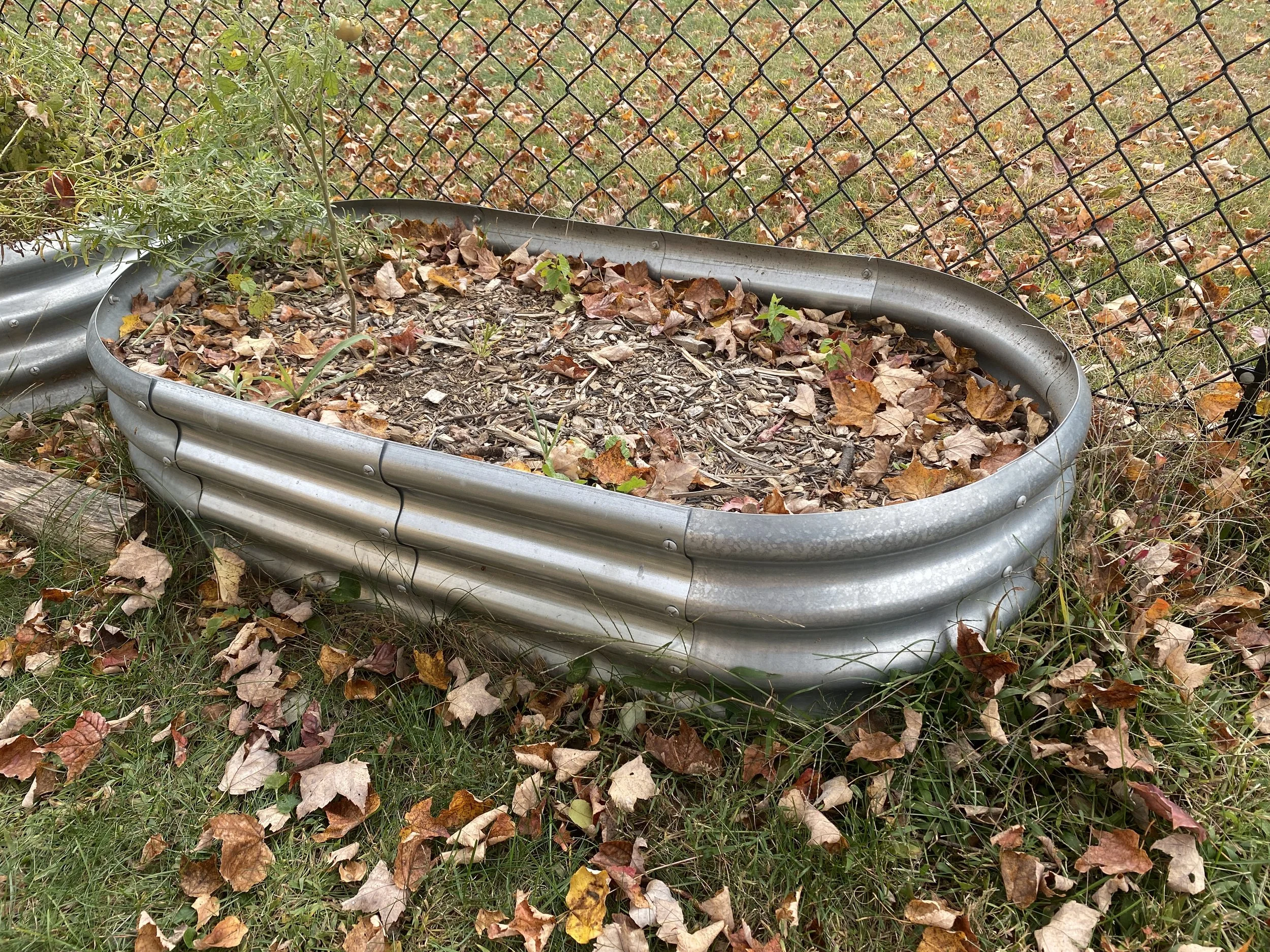
For a more permanent garden space, raised garden beds work fantastic in most spaces. You can create raised garden beds out of materials like wood and straw bales, but if you don’t want to create your own, galvanized raised garden beds are a nice option. They come in a variety of sizes and are easy to put together.
This Galvanized Raised Garden Bed Kit (affiliate link) is a nice size and has worked great for our vegetables and flowers.
9. Adjustable Plant Supports
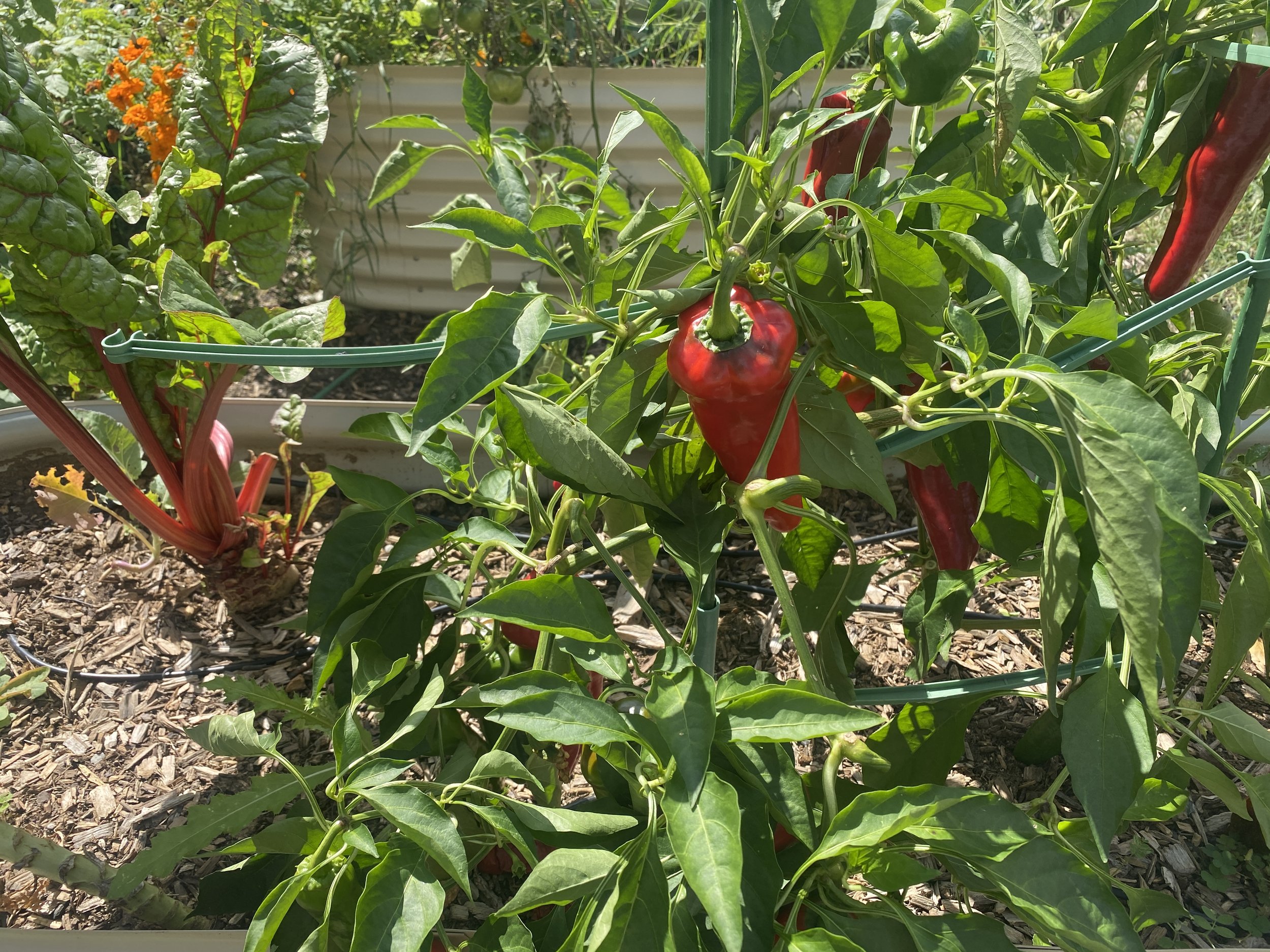
A lot of vegetable plants can grow to be very tall and wide, so plant supports are essential to keeping your plants upright and healthy. There are options for plant support like tomato cages, but we prefer adjustable supports, which can be useful for any sized plant. Adjustable supports can be customized to each plant and store away easily in the off season.
We keep a few of these Tomato Cage for Garden Plant Support (affiliate link) kits handy and they end up being the trellis system for 90% of our garden.
10. Melon Cradle
If you’re planning on growing any type of squash, pumpkin, or melon, having a melon cradle can be really useful to get your plants to harvest. We love to use these for our pumpkin patch since we get a lot of rain in the fall. The cradle sticks into the ground and keeps the pumpkins off the wet grass, which can damage the pumpkin before it’s fully ripe and ready to harvest. They also work great for any type of squash or melon that you have vining across the ground.
These Melon Cradles (affiliate link) are the perfect size for most plants and stack together for easy storage.

11. Gorilla Cart
When tending to a garden, you end up moving around a lot of items, like mulch, soil, and plant pots. When we first started gardening, we used a second hand wheelbarrow, which required a lot of arm strength to move heavy loads around. Once we got our Gorilla Cart, we never touched our wheelbarrow again. Our Gorilla Cart is used almost daily in the garden and has saved us a ton of time and back pain.
This Gorilla Carts Heavy Duty Dump Cart (affiliate link) can hold up to 600 pounds, is easy to maneuver, and has a quick-release for easy dumping.

12. Watering Globes
Whether you’re growing plants indoors or outdoors, watering globes are great for evenly watering your plants and adding a bit of color to your garden. The watering globes stick in the soil next to your plant’s roots and the water will absorb into the soil as it dries out. They can usually keep a small potted plant watered for 3-5 days before needing to be refilled.
These Large Plant Watering Globes (affiliate link) come in a variety of colors and have worked great for our houseplants and herb planters.

13. Terracotta Self Watering Spikes
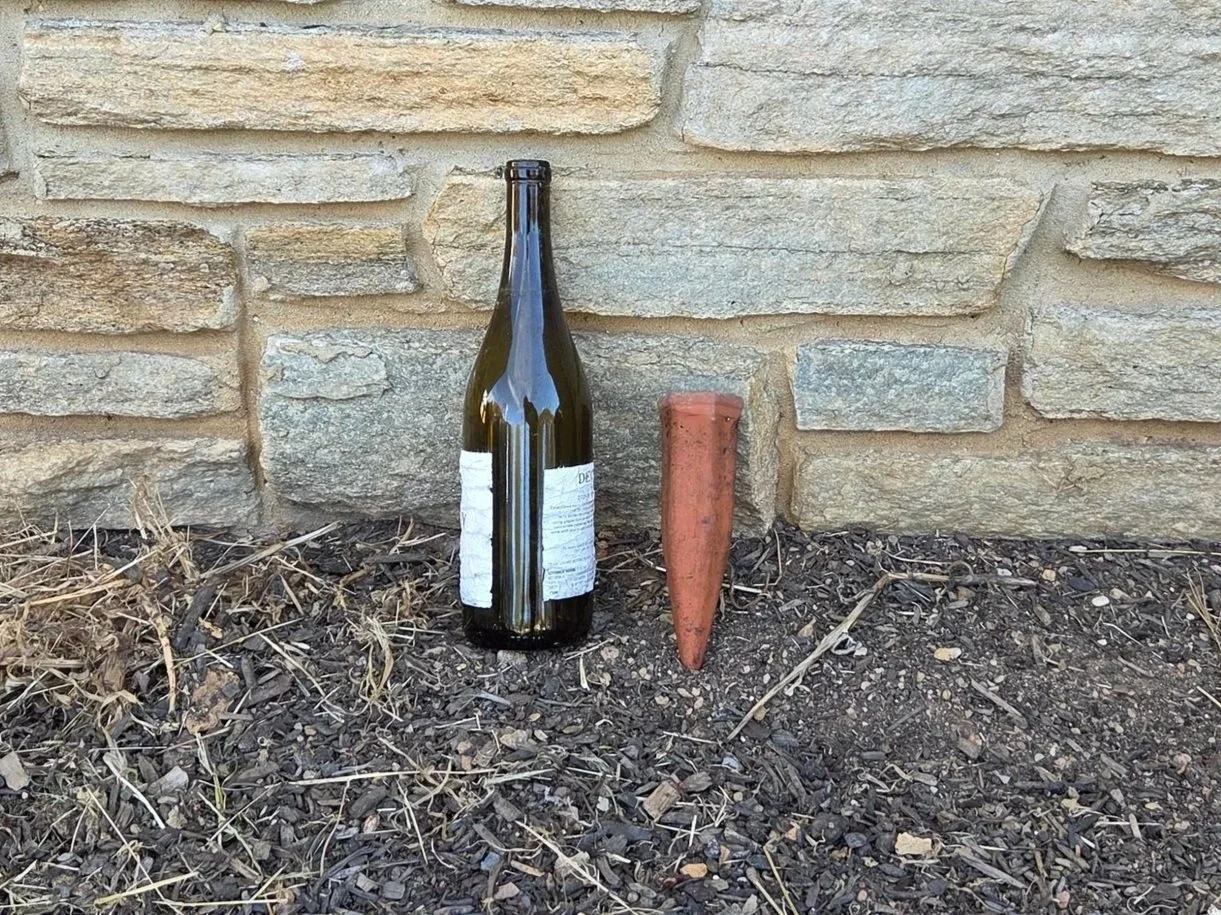
Self watering spikes are another great option for saving time watering the garden. You put the terracotta spike into the soil next to the plant’s roots and then add a bottle with water to the top of the spike. The water will slowly seep through the terracotta and into the garden soil as the plant needs it. Repurposed glass wine bottles hold enough water for a large plant, like tomatoes or peppers, for 5-7 days.
We use these Terracotta Self Watering Spikes (affiliate link) for all of our potted plants outside and it saves us so much time during the summer.
14. Drip irrigation kit
One of the best investments we made in our garden was purchasing an irrigation kit. There are a lot of different options for irrigation, but we prefer drip lines, which sit at the base of your plants and drip water for a set amount of time. These are better for your plants because they don’t soak the leaves and fruits, which can cause molding and diseases. We use drip lines for as much of our garden as possible each year and it keeps our plants happy with just the right amount of water.
This Dripworks Drip Tape Irrigation Kit (affiliate link) is easy to set up and can be re-used year after year.

15. Smart Watering Timer
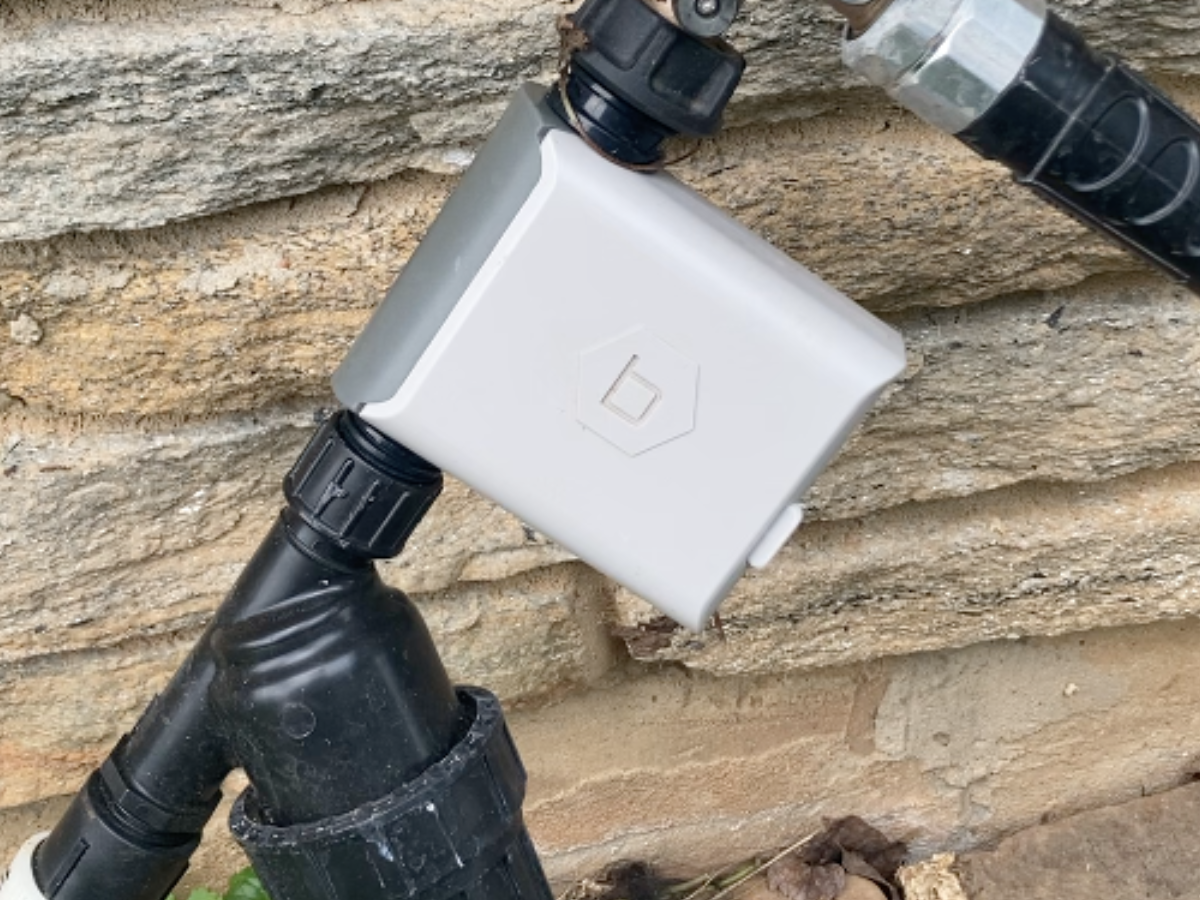
For the most hands off approach to watering the garden, a smart watering timer paired with an irrigation system will save time and conserve the most water. You can set up the system to work for each individual plant’s watering needs by automating the system to run for a set amount of time. The smart watering timer automates the process and can even be set to monitor the weather and adjust accordingly.
We have used the B-hyve Smart Hose Watering Timer (affiliate link) for several years and it’s a reliable and easy to use tool.
16. Rain barrel spigot kit
If you’re interested in collecting rainwater for the garden, we highly recommend converting an old food grade barrel into a rainwater collection system. While there are rain barrels that can be purchased, repurposing an item is great for the environment and your wallet. Look at your local thrift stores or online marketplace for food grade barrels in the spring and summer. They’re usually easy to find and very cheap. We purchased 2 food grade barrels for $20 and converted them into rain barrels with a rain barrel spigot kit. All you have to do is clean out the barrel, drill a few holes, and install the kit.
This Brass Rain Barrel Spigot Kit (affiliate link) will save you a lot of money compared to purchasing the parts individually. It has easy to follow instructions and has worked wonderfully in our garden.

17. Rainwater Collection Downspout Diverter
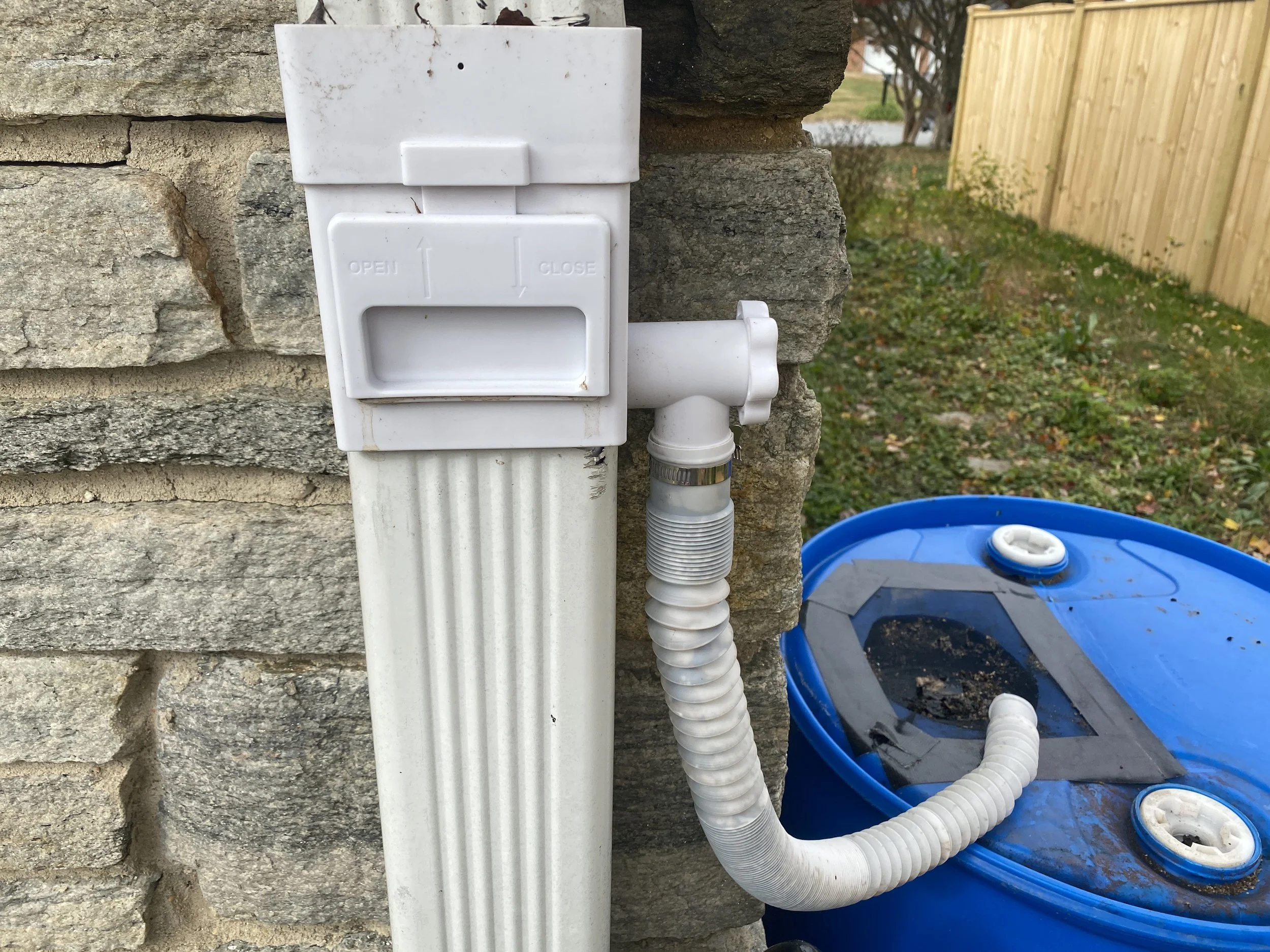
Using the downspouts on your gutters is an easy and efficient way of collecting rainwater. There is usually more surface area on your roof than you would get from leaving a rain barrel out in the open to collect water. Instead of that water going to waste, use a downspout diverter to direct the water straight into your rain barrel.
This Rainwater Collection System Downspout Diverter (affiliate link) was easy to install and has a handy knob to manage the amount of water flow.
18. Plant Tags
A lot of plants can look very similar when they are small, so labeling is a crucial step in gardening. We like to start our seeds indoors during the winter and having the plants labeled is the only way we would know what they are. There are a ton of options for plant tags, but we like to use a standard tag that is easy to read and doesn’t take up too much space.
These Plant Tags (affiliate link) are large enough to label the plant variety and can be reused year after year. Just wash the tags in hot water or use rubbing alcohol to clean them off before reusing them.

19. Solar lights
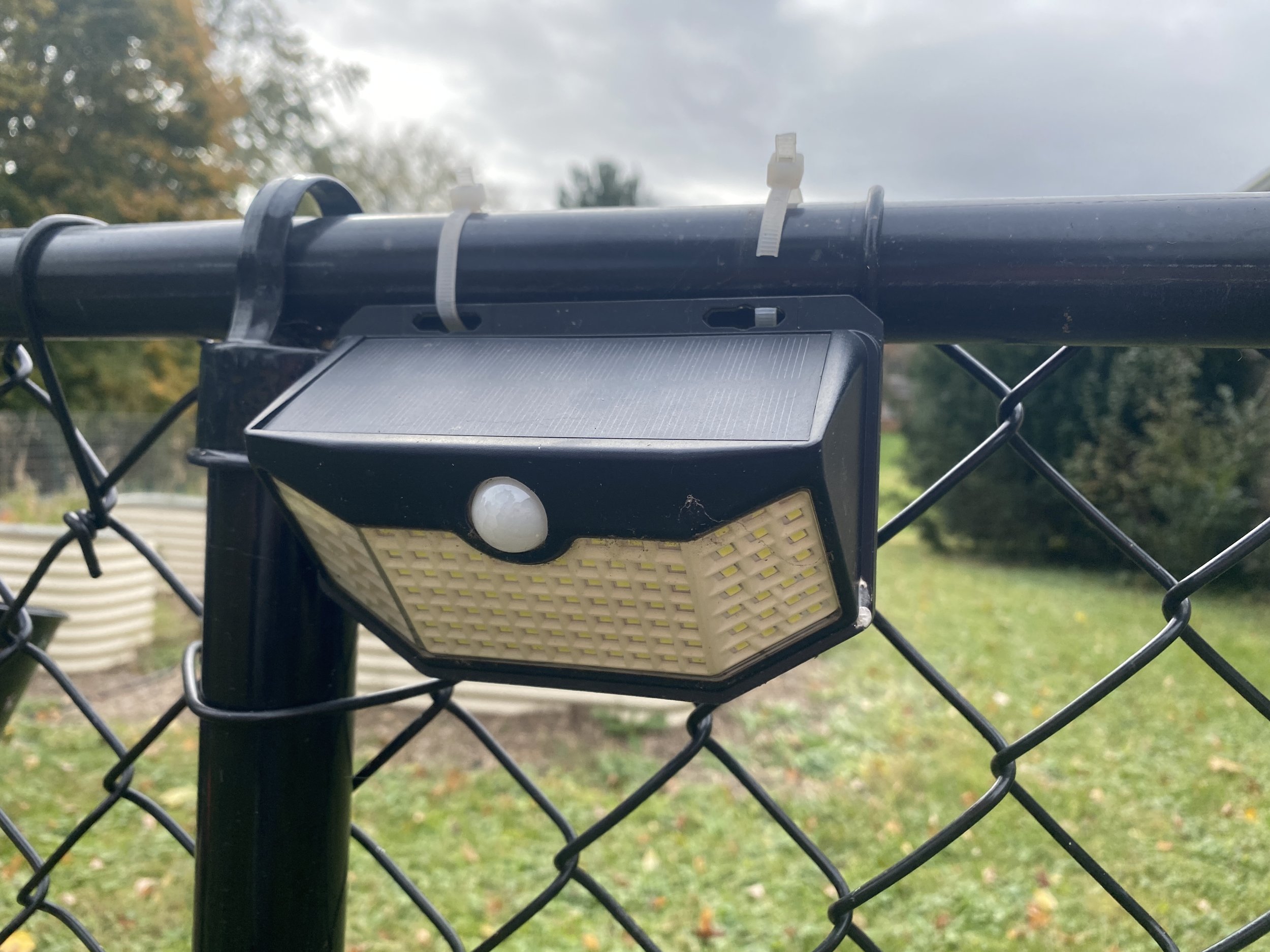
We love to stroll through the garden at night, when it’s not too hot and the bugs aren’t bothering us, so solar lights are a must. Solar lights are a great eco-friendly option for lighting pathways or garden beds without needing to plug into anything.
These HMCITY 120 LED Outdoor Solar Lights (affiliate link) have a motion sensor feature so our garden isn’t too bright at night, but we can still see everything we want to. Plus, they’ve lasted several years in our garden, through hot and cold temperatures.
20. Tumbling Composter
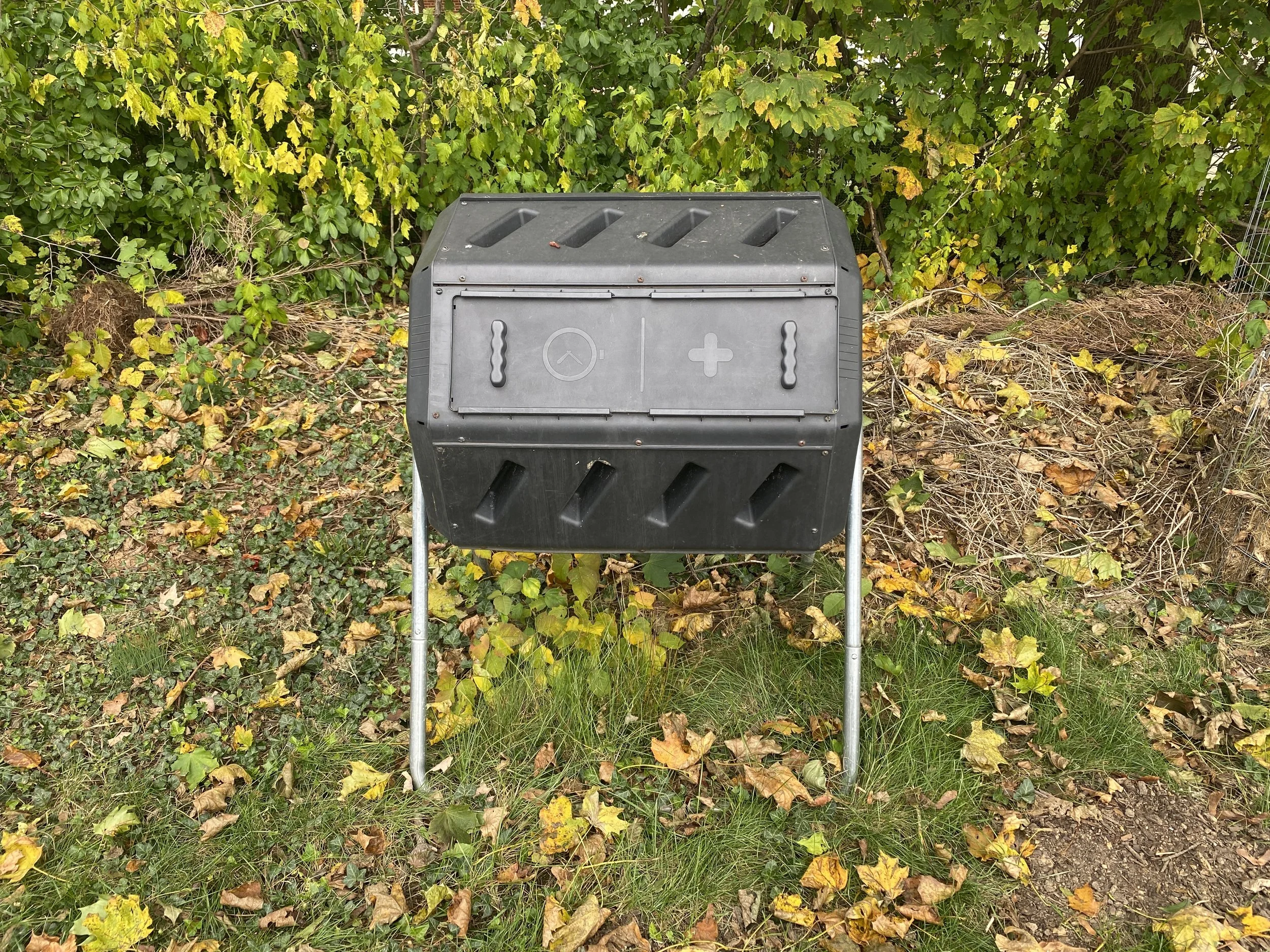
Composting is a great way to reduce food waste and save money on soil for the garden. Using a composter keeps your food scraps away from animals and makes the process a lot easier for the gardener. Compost requires frequent turning to ensure everything breaks down. A tumbling composter makes that process easy by allowing you to spin the composter, rather than needing to move around the food scraps with a shovel or tool.
This FCMP Dual Chamber Tumbling Composter (affiliate link) is visually appealing and makes it easy to turn your compost.
You May Also Like

About the Authors
The Votana Garden began with a desire to live more sustainably and grow our own food, flowers, and herbs. We started with no experience and have learned one season at a time. We share tips and practical insights to help make gardening and sustainable living feel possible for everyone.

Winter is a great time to rest and prepare yourself for the upcoming year. Complete these garden tasks this winter so your garden is ready for the spring.